Choosing the right network cabling can impact your speed, reliability, and future growth. This guide breaks down Cat 5e, Cat 6, and fiber optic options so you can make a smart, scalable decision for your business.
For most small businesses, Cat 6 cabling offers the best balance of speed, cost, and future-proofing, while Cat 5e works for basic needs and fiber optic is ideal for high-performance environments that require maximum speed, long-distance connectivity, and advanced scalability.
Quick Summary
If your business relies on stable internet, cloud tools, or security systems, your cabling matters more than you might think. Cat 5e is budget-friendly but aging. Cat 6 delivers faster speeds and better performance for modern operations. Fiber optic is the premium option for speed, distance, and reliability, especially for growing or data-heavy businesses.
Understanding Your Options: Cat 5e vs. Cat 6 vs. Fiber Optic
Cat 5e: The Budget-Friendly Basic
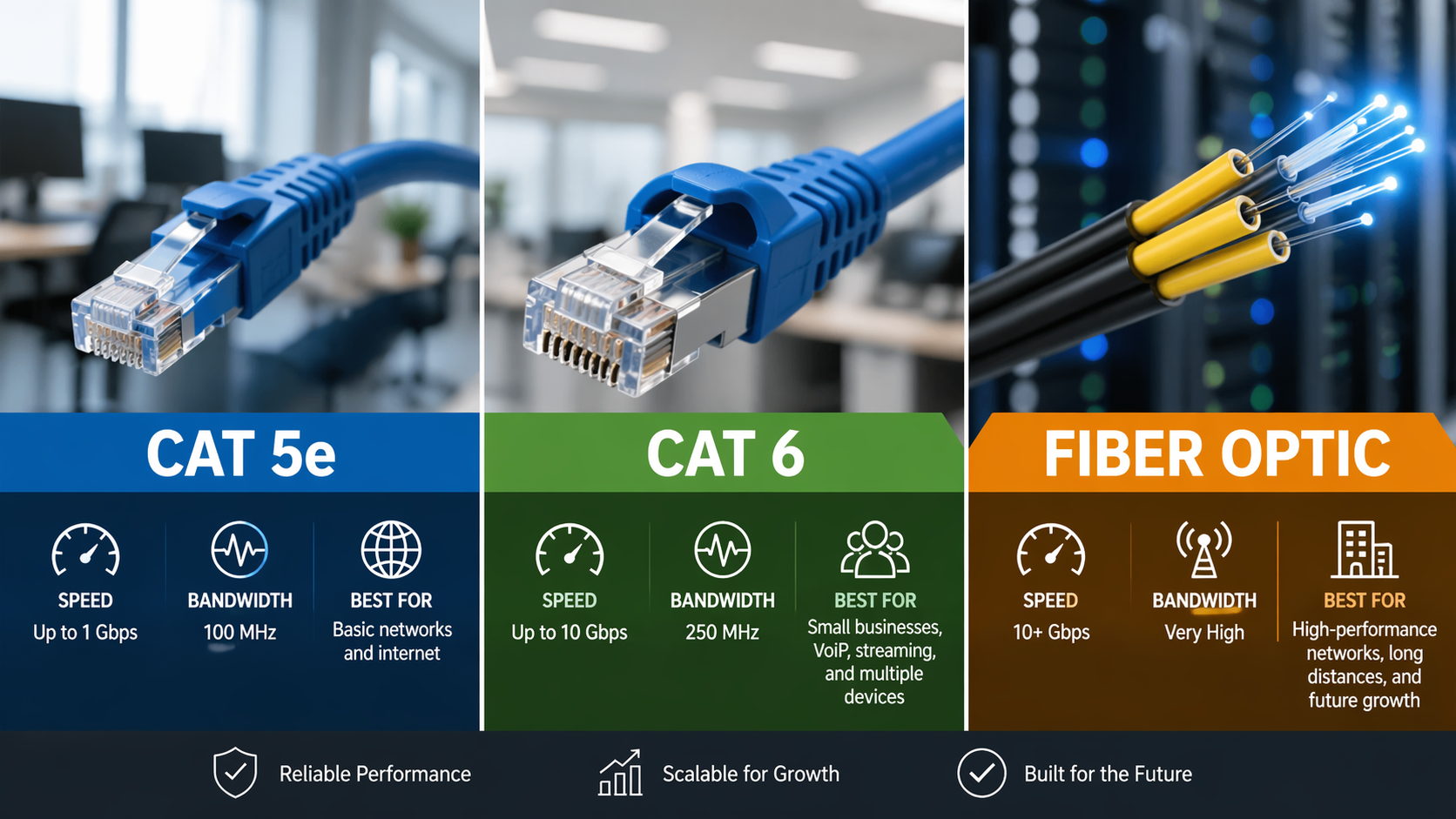
Cat 5e (Category 5 enhanced) is still widely used and supports:
- Speeds up to 1 Gbps
- Bandwidth up to 100 MHz
- Reliable performance for small, low-demand networks
Best for:
- Very small offices
- Basic internet usage
- Minimal connected devices
Limitations:
- Not ideal for future growth
- More prone to interference compared to newer options
Cat 6: The Small Business Sweet Spot
Cat 6 is the most common recommendation for modern businesses.
- Speeds up to 10 Gbps (at shorter distances)
- Bandwidth up to 250 MHz
- Improved shielding reduces interference
Best for:
- Offices with multiple users and devices
- VoIP phone systems
- Security systems and video surveillance
- Cloud-based applications
Why it stands out:
Cat 6 provides a strong balance between performance and cost, making it ideal for most small to mid-sized businesses planning for growth.
Fiber Optic: Maximum Performance and Scalability
Fiber optic cabling uses light instead of electricity, delivering unmatched speed and reliability.
- Speeds exceeding 10 Gbps
- Extremely low latency
- Long-distance capability without signal loss
Best for:
- Large offices or campuses
- High-bandwidth environments
- Data-heavy operations
- Businesses planning long-term expansion
Considerations:
- Higher upfront cost
- Requires specialized installation
How to Choose the Right Cabling for Your Business
When deciding between Cat 5e, Cat 6, and fiber optic, consider:
1. Your Current Network Usage
- Basic browsing and email: Cat 5e may suffice
- Streaming, VoIP, or surveillance: Cat 6 is better
- Large data transfers or multiple systems: Fiber optic
2. Future Growth Plans
Installing better cabling now can prevent costly upgrades later. Cat 6 or fiber is often a smarter long-term investment.
3. Distance Requirements
- Short runs within an office: Cat 6 works well
- Long-distance connections between buildings: Fiber optic is ideal
4. Integration with Security Systems
If you’re installing:
- Video surveillance (CCTV)
- Access control systems
- Alarm monitoring
You’ll benefit from faster, more reliable cabling like Cat 6 or fiber.
Why Network Cabling Matters for Security and Connectivity
Your cabling infrastructure directly impacts:
- Video surveillance quality and uptime
- Access control system reliability
- Fire and security alarm communication
- Internet speed and network stability
A poorly designed network can cause lag, downtime, and security vulnerabilities.
Professional Network Cabling and Security Solutions
First Solutions Inc. provides comprehensive services, including:
- Custom security system design for residential and commercial properties
- Access control systems and keyless entry solutions
- Fire alarm systems and monitoring services
- Security alarm systems and monitoring
- Video surveillance systems, including CCTV installation
- Computer and network cabling, including:
- Fiber optic cabling
- Category 5e cabling
- Category 6 cabling
Serving Northern California Businesses
Businesses across Northern California rely on professional network and security solutions in:
- Sacramento
- Elk Grove
- Roseville
- Rocklin
- Arden-Arcade
- Citrus Heights
- Folsom
- Rancho Cordova
- Vineyard
- Carmichael
- Antelope
- North Highlands
- Florin
- Fair Oaks
- Rio Linda
- Elverta
- El Dorado Hills
- Sacramento County
- Placer County
- El Dorado County
Local expertise ensures your system is designed for your specific environment, building layout, and operational needs.
Common Mistakes to Avoid
- Choosing the cheapest option without considering growth
- Ignoring interference and cable quality
- Not planning for future bandwidth needs
- Skipping professional installation
Conclusion
For most small businesses, Cat 6 is the best overall choice, offering speed, reliability, and scalability. However, if your operations demand high performance or long-distance connectivity, fiber optic is worth the investment. Cat 5e can still work for simple setups, but it is becoming outdated.
The right choice depends on your business needs today and where you plan to grow tomorrow.
Get expert guidance and professional installation for your network and security systems. Contact
First Solutions Inc. today at
(916) 649-0479
to design a reliable, future-ready solution tailored to your business.
Here Are Some Other Frequently Asked Questions:
Q: What is the main difference between Cat 5e and Cat 6?
A: Cat 6 supports higher speeds and better performance due to improved shielding and bandwidth, making it more suitable for modern business networks.
Q: Is fiber optic worth it for a small business?
A: Yes, if your business relies on high-speed data, large file transfers, or long-distance connections, fiber optic provides unmatched performance and reliability.
Q: How long does network cabling last?
A: Properly installed cabling can last 10 to 20 years, but technology upgrades may require earlier replacement for performance reasons.
Q: Can I upgrade from Cat 5e to Cat 6 later?
A: Yes, but it may require replacing existing cables and infrastructure, which can be more expensive than installing Cat 6 initially.
Q: Do security systems require special cabling?
A: Many modern systems perform best with high-quality cabling like Cat 6 or fiber optic to ensure reliable connectivity and data transmission.