
If you are comparing CCTV and IP camera systems for your home or business, this guide explains the key differences, benefits, and best use cases so you can make a confident, informed decision.
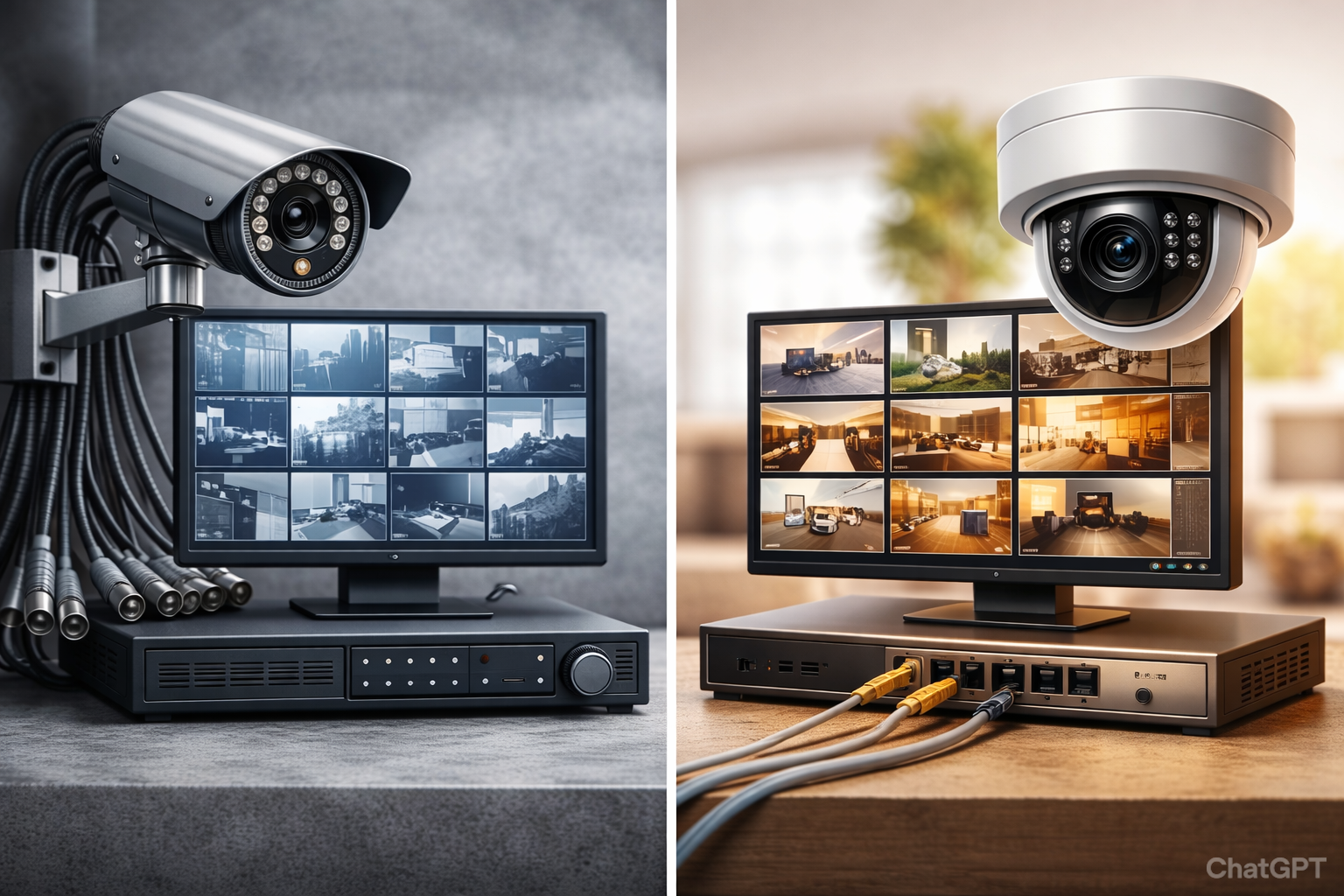
CCTV systems use analog cameras connected by coaxial cables to a central recorder, while IP camera systems use digital cameras that transmit video over a network, offering higher resolution, remote access, and greater scalability for modern security needs.
Both systems provide reliable surveillance and crime deterrence. The best choice depends on your property size, budget, image quality expectations, and whether you plan to expand your system in the future. Below is a clear, practical breakdown to help you decide.
How CCTV Systems Work
CCTV stands for closed circuit television. These systems use analog cameras connected directly to a digital video recorder, or DVR, using coaxial cables.
Key Characteristics of CCTV Systems
- Analog cameras
- Coaxial cable connections
- Centralized DVR recording
- Typically lower upfront cost
- Reliable for small to mid sized properties
CCTV systems are often used in homes, small retail stores, and offices where straightforward monitoring is the priority.
When CCTV Makes Sense
CCTV may be a good option if:
- You want a cost effective security solution
- Your property is smaller or has simple coverage needs
- You are upgrading an older analog system
- Ultra high resolution video is not essential
How IP Camera Systems Work
IP stands for Internet Protocol. These cameras send digital video across a network using Ethernet cables or wireless connections. Footage is stored on a network video recorder, or NVR, or through secure cloud storage.
Key Characteristics of IP Camera Systems
- High definition and ultra high definition video
- Remote access via smartphone or computer
- Power over Ethernet capability
- Easier expansion and scalability
- Advanced features such as motion analytics and smart alerts
IP systems are commonly installed in larger homes, commercial facilities, warehouses, medical offices, and multi building properties.
When IP Cameras Make Sense
IP cameras are often the better choice if:
- You want high resolution video for clear identification
- You need remote access from multiple devices
- You plan to expand your system later
- You want integration with access control or alarm systems
CCTV vs. IP Cameras: Side by Side Comparison
If you are deciding between CCTV and IP camera systems, here is a clear breakdown of how they compare across the most important features:
Video Quality
- CCTV: Standard definition to high definition, depending on the camera model.
- IP Cameras: High definition to 4K and higher, offering sharper images and better detail.
Cabling and Infrastructure
- CCTV: Uses coaxial cable to connect each camera directly to a DVR.
- IP Cameras: Uses Ethernet cabling or wireless connections. Many systems support Power over Ethernet, allowing power and data through one cable.
Remote Access
- CCTV: Remote access is possible but often more limited.
- IP Cameras: Designed for easy remote viewing through smartphones, tablets, and computers.
Scalability
- CCTV: Expansion may require additional wiring and hardware changes.
- IP Cameras: Highly scalable and easier to expand within an existing network.
Smart Features
- CCTV: Basic recording and motion detection.
- IP Cameras: Advanced analytics such as motion alerts, video analytics, and system integration.
Cost Considerations
- CCTV: Generally lower upfront cost.
- IP Cameras: Higher initial investment, but often greater long term flexibility.
For many modern installations across Sacramento County, Placer County, and El Dorado County, IP systems provide greater flexibility. However, CCTV remains a practical and reliable option for certain properties.
Integrated Security Solutions for Northern California Properties
Video surveillance works best when combined with other protective systems. Property owners across Sacramento, Elk Grove, Roseville, Rocklin, Arden Arcade, Citrus Heights, Folsom, Rancho Cordova, Vineyard, Carmichael, Antelope, North Highlands, Florin, Fair Oaks, Rio Linda, Elverta, and El Dorado Hills often benefit from a fully integrated approach.
Comprehensive protection may include:
- Designing custom security solutions tailored to individual needs
- Residential security systems
- Commercial security solutions for properties of all sizes
- Installing and servicing access control systems and keyless entry solutions
- Designing, installing, and servicing fire alarm systems and security alarm systems
- Reliable fire and security alarm monitoring services
- Designing and installing video surveillance systems, including CCTV solutions
- Designing and installing computer and network cabling systems, including fiber optic cabling, Category 5e cabling, and Category 6 cabling
- Providing TV installation services and home entertainment system installation
A properly designed infrastructure ensures your cameras, alarms, and access control systems work seamlessly together.
Why Professional Design and Installation Matter
Choosing the right equipment is only part of the process. Professional installation ensures:
- Correct camera placement and coverage
- Secure and organized cabling
- Optimized network performance
- Code compliant fire and alarm integration
- Long term reliability and support
Poor placement or improper configuration can lead to blind spots and weak performance when you need security most.
Serving Sacramento and Northern California
Properties across Sacramento County, Placer County, El Dorado County, and throughout Northern California have unique security needs. Urban businesses in Sacramento may require high resolution remote monitoring. Residential communities in Roseville, Rocklin, and El Dorado Hills may prioritize perimeter coverage and smart alerts.
A locally designed system ensures your property is protected based on its layout, risk level, and future growth plans.
Ready to Choose the Right Surveillance System?
Whether you need a cost effective CCTV solution or a scalable IP camera system with advanced features, the right design makes all the difference.
Contact First Solutions Inc. at (916) 649-0479 today to schedule a consultation and design a custom security solution that protects your home or business.
Go even deeper. Read: How Many Security Cameras Does My Property Need? Here’s What You Should Know
Frequently Asked Questions
Which is better for a small business, CCTV or IP cameras?
For small businesses with simple layouts, CCTV can be cost effective and reliable. If you need high resolution video or remote access, IP cameras are often the better choice.
Do IP cameras require internet access?
They require a network connection. Internet access is needed for remote viewing outside your property, but local recording can function without constant internet connectivity.
Can I upgrade from CCTV to IP later?
Yes. Many properties transition to IP systems over time. A professional evaluation can determine what infrastructure can be reused.
Are IP camera systems more secure?
When properly configured, IP systems offer strong security with encrypted data transmission and user authentication controls.
Can surveillance systems integrate with fire alarms and access control?
Yes. Modern systems can integrate with access control systems, keyless entry solutions, fire alarm systems, security alarm systems, and monitoring services for comprehensive protection.